
What Is the USDA Section 504 Home Repair Program
The Section 504 Home Repair Loan and Grant program is a federal assistance program run by USDA Rural Development. It’s designed for very-low-income homeowners in rural areas, offering low-interest loans — or grants that never need to be repaid — to help repair and make homes safer.
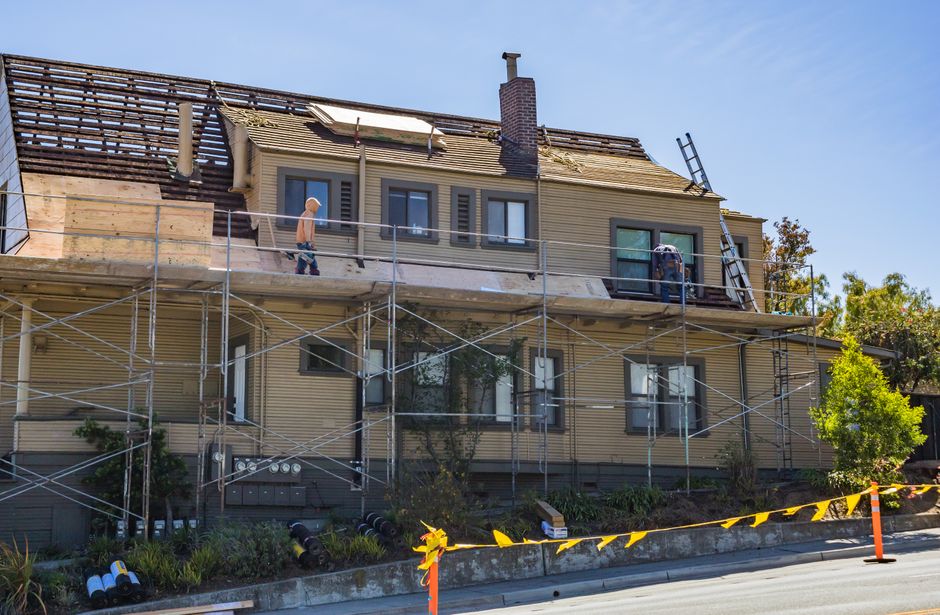
Loan funds can be used broadly for repairs and modernization, like replacing a roof, fixing plumbing, or improving insulation. Grants, on the other hand, are reserved strictly for removing health and safety hazards — think a moldy, failing roof, a broken heating system, or outdated wiring.
Who Qualifies
Eligibility comes down to three main requirements. First, the applicant must own and occupy the home. Second, the home must be located in a USDA-designated eligible rural area — some suburbs and small towns qualify even if they don’t feel especially rural, so it’s worth checking your exact address on the USDA site.
Third, household income must fall below the “very low income” threshold set for that county, which varies by county and household size. Grants specifically are limited to homeowners age 62 or older who cannot repay a loan. If you’re under 62 or considered able to repay, you can only receive assistance in loan form.
Meeting those three tests on paper doesn’t always get an application through. These are the snags the program’s regulations (7 CFR 3550.103 and 3550.107) set up:
- Savings above the limit. Net family assets above $20,000 for an elderly household ($15,000 for a younger one) have to go toward the repair first, which shrinks the amount USDA will finance.
- Credit problems. For loans, recent serious delinquencies, outstanding tax liens and recent foreclosures count against you. A cosigner or other household member can sometimes join the application if your own budget falls short.
- Unclear ownership. A deed is the simplest proof, but USDA also accepts a life estate, a long enough leasehold (at least 5 years remaining for a grant) and alternative evidence such as tax records. Co-owners who live in the home may have to sign the repayment agreement.
- Income counted after deductions. The test uses adjusted household income, not the number on your benefit letter, so the line is not always where it first looks.
- Damage too severe. After the work, the home can’t still have major health or safety hazards. A house needing more than the program can fix may be turned down.
How Much You Can Get
Loans max out at $40,000, with a fixed 1% interest rate over a 20-year term — well below market rates, which keeps monthly payments manageable.
Grants have a lifetime cap of $10,000, rising to $15,000 in areas the President has declared a disaster area. If you combine a loan and a grant, the combined maximum is $50,000 ($55,000 in disaster areas). In other words, if your repair needs are extensive, you can apply for both a loan and a grant together.
Loans at 1% over 20 years cost about $4.60 a month for every $1,000 borrowed. Here is what that looks like at a few sizes:
| Loan amount | Approximate monthly payment (1%, 20 years) |
|---|---|
| $5,000 | $23 |
| $10,000 | $46 |
| $20,000 | $92 |
| $40,000 (the maximum) | $184 |
One more thing to know before you sign: once your total Section 504 debt reaches $7,500, USDA takes a mortgage on the home as security.
How a loan and grant split can work
USDA looks at your household budget to decide how much you can repay, and for applicants 62 and older a grant can cover the part you can’t. Say you are 70, you own your home, and a failing roof plus bad wiring will cost $14,000. After the budget review, suppose you can comfortably pay $40 a month.
- At about $4.60 per $1,000, $40 a month supports a loan of roughly $8,700.
- The remaining $5,300 or so could come as a grant, well inside the $10,000 lifetime cap.
- If you could afford $75 a month, you could borrow about $16,300, enough for the whole job, so no grant would be needed.
These numbers are an illustration. The local office runs the real budget, and your result will differ.
What the Funds Can — and Can’t — Be Used For
Eligible work is limited to clear health-and-safety repairs: roof repairs, replacing an old heating system, installing a wheelchair ramp, and removing hazards like electrical, fire, or structural risks.
Purely cosmetic work — like kitchen remodels or interior decorating — doesn’t qualify. Also, if you sell your home within three years of receiving a grant, you’ll typically have to repay it. That condition exists to make sure the grant was actually used to help someone stay safely in the home long-term.

How to Apply
Applications go through your local USDA Rural Development office. You’ll typically start with an informal pre-qualification based on your income and the condition of your home, then submit a formal Uniform Residential Loan Application along with proof of income and homeownership documents.
USDA’s application package asks for a fairly specific set of papers, and a missing item can leave the application incomplete. Gather these before you call:
- The application form (RD 410-4), a signed authorization to release information (RD 3550-1) and the employment and asset certification (RD 3550-4)
- Proof of ownership, such as a deed, plus your most recent property tax statement
- Proof of homeowner’s insurance
- Itemized repair bids, with the contractor’s license where one applies
- A recent mortgage statement, if you have a mortgage
- Photos of the damage and of the front and back of the house
- Proof of age, if you are asking for a grant
Once your application is in, a staff member will often visit the property in person to assess what repairs are needed. You can find your local Rural Development office by state on the USDA website.
Frequently Asked Questions
If my income is just slightly above the limit, am I automatically disqualified?
The regulations test your adjusted household income, meaning income after certain deductions, against the very low-income limit for your county at the time of approval. Because the number that counts isn’t always the number on your pay stub or benefit letter, ask the local office to run the calculation if you’re close instead of ruling yourself out.
Can I combine this with other home repair assistance programs?
Yes, often you can. It’s common to pair Section 504 with other federal or state programs, like the Weatherization Assistance Program, to cover any funding gap.
How long does approval usually take?
It varies widely depending on your local office’s workload and budget timing, but the process from application to approval typically takes anywhere from a few weeks to a few months. Since funding can run out early in the year, it’s best to apply as soon as you know you need help.
If you’re an older homeowner in a rural area dealing with a leaking roof or broken heating system you can’t afford to fix, the USDA Section 504 program could offer real help. Contact your local office directly to check your eligibility.