
Heating season is here, and if you are retired you probably spend more hours at home than you did a few years ago. That makes the thermostat one of the few bills you can change today without calling anyone. The U.S. Department of Energy has a simple rule for it, and it costs nothing to test.
What the Energy Department Actually Says
The Energy Saver Guide says you can save as much as 10% per year on heating and cooling by turning your thermostat down 7 to 10 degrees Fahrenheit for 8 hours a day in the fall and winter. In spring and summer, you turn it up instead.
Two things are worth noticing. The figure is “as much as,” not a promise, and it applies to the combined heating and cooling bill. Your own result depends on your home, your climate and how many hours you really hold the lower setting.

Pick the 8 Hours That Fit Your Day
Most advice assumes everyone leaves for work. In retirement, the 8 hours usually come from a mix of these:
- Overnight, while you sleep under a warm blanket.
- Regular outings such as a morning walk, church, volunteering or a standing appointment.
- Afternoon errands that take you out for a few hours.
The longer the house stays at the lower temperature, the less heat it loses, so the savings come from time at the lower setting, not from the number alone.
A Quick Example With Real Numbers
Say your combined heating and cooling cost is $1,500 a year. This is an illustration, not a quote. Ten percent of that is $150, and that is the ceiling the Department of Energy describes. If your setback only runs 5 or 6 hours on most days, expect to land below it.
| Yearly heating and cooling cost | Up to 10% saved |
|---|---|
| $1,000 | $100 |
| $1,500 | $150 |
| $2,000 | $200 |
Check your own bill history or ask your utility for a 12-month usage summary to find your number.
Manual, Programmable or Smart Thermostat?
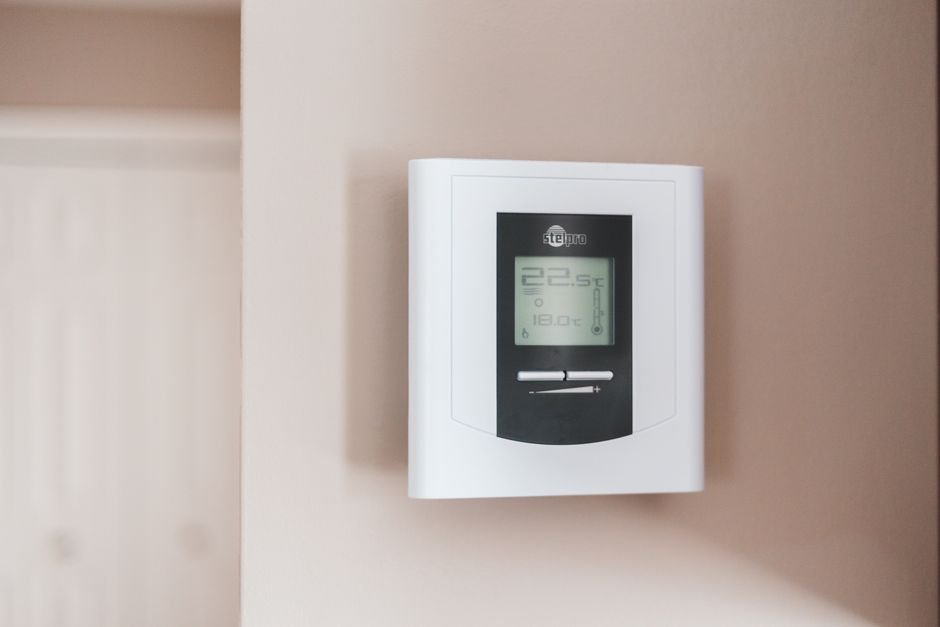
You do not need to buy anything to use the rule. You can lower a manual dial at bedtime and raise it in the morning. A scheduled model just does it for you.
| Type | How it works | Consider it if |
|---|---|---|
| Manual | You change the setting yourself | You are happy with a bedtime routine and want to spend nothing |
| Programmable | Turns heat or air conditioning on at times you schedule; you can override a setting without wiping the program | You want a schedule without Wi-Fi. The guide says these are cheaper than smart thermostats but must be set up |
| Smart | Wi-Fi device that can learn your schedule, show energy use and be controlled from a phone or tablet | You like remote control. The guide says smart models are generally easier to use, and ENERGY STAR certified ones are tested on field data |
If You Have a Heat Pump, Read This First
The Energy Saver Guide adds a warning in parentheses: if you have a heat pump, do not do this without a smart or programmable thermostat designed for use with heat pumps. Not sure what you have? Look at the label on the outdoor unit or ask your HVAC company before changing any schedule.
Seal the Leaks Too
The same guide says caulking, sealing and weatherstripping the seams, cracks and openings to the outside can save 10% to 20% on heating and cooling bills. A cheaper thermostat habit and a few tubes of caulk work well together, because a leaky house loses the heat you just paid for. It also says clean or replace furnace filters once a month or as recommended.
Is a Lower Setting Right for You?
Use this quick checklist before you start.
- Heat pump? Confirm your thermostat is built for it before setting a schedule.
- Feel the cold or have a health condition? Ask your doctor what indoor temperature is safe for you, and use the setback only while you are asleep under covers or out of the house.
- Home most of the day? Try overnight only first, then add an afternoon outing.
- Drafty house? Seal leaks first, since that is where the guide points to the larger 10% to 20% range.
Frequently Asked Questions
Is it cheaper to leave the heat at one temperature all day?
The Department of Energy says the opposite: lower indoor temperatures slow heat loss, so holding a lower setting for longer saves more.
How much will I really save?
Up to about 10% a year on heating and cooling, according to the Energy Saver Guide. Your actual savings depend on your home, weather and schedule.
Do I need a smart thermostat?
No. A manual dial works if you remember to change it. Programmable and smart models automate it.
A Realistic Ceiling: Using the Guide’s Own Numbers
The Energy Saver Guide says air conditioning and space heating together typically make up about 32% of your home’s energy use. That share helps you put the 10% figure in perspective. The example below uses a made-up household and treats the 32% share as a rough guide to cost, so treat the results as an estimate and not a prediction:
| Yearly total energy spend (example) | Roughly 32% on heating and cooling | Up to 10% of that |
|---|---|---|
| $2,000 | $640 | $64 |
| $3,000 | $960 | $96 |
| $4,000 | $1,280 | $128 |
This is a more cautious picture than the earlier table, which assumed the whole $1,500 or $2,000 was already heating and cooling. Which table fits you depends on your utility bills. Either way, the savings are real but modest, which makes the free version of the habit the best starting point.
A Four-Week Trial Plan
Instead of changing everything at once, try this and keep notes on how comfortable you are:
- Week 1: Overnight only. Lower the setting by a few degrees at bedtime and raise it when you wake up. Use extra blankets.
- Week 2: Add an outing. If you are out for several hours on certain days, lower it before you leave.
- Week 3: Go further if you are comfortable. The guide’s range is 7 to 10 degrees Fahrenheit for 8 hours. You don’t have to reach the full range on day one.
- Week 4: Compare. Look at your usage (kWh or therms) for the same period last year, not just the dollar amount, because weather and rates change.
Free Heating Tips From the Same Guide
| Tip | What the guide says |
|---|---|
| Furnace filters | Clean or replace once a month or as recommended |
| Registers and radiators | Keep warm-air registers, baseboard heaters and radiators clean and not blocked by furniture, carpeting or drapes |
| Sunlight | Open draperies and shades on south-facing windows during the day, and close them at night to reduce the chill from cold windows |
| Air leaks | Caulk, seal and weatherstrip seams, cracks and openings to the outside to save 10% to 20% on heating and cooling bills |
| Ducts | Ducts that leak air into an attic or crawl space can add hundreds of dollars a year to heating and cooling bills |
Common Mistakes
- Cranking the heat way up to “catch up.” Raising the setting well above your normal level doesn’t warm the house faster. Return to your usual setting and let the system do its work.
- Blocking a register or radiator with furniture or drapes. The guide lists this as something to avoid.
- Setting a schedule on a heat pump with the wrong thermostat. The guide specifically warns against this unless the thermostat is designed for heat pumps.
- Measuring only the dollar amount on one bill. A cold month will raise a bill even if you are saving energy. Compare similar weather periods.