
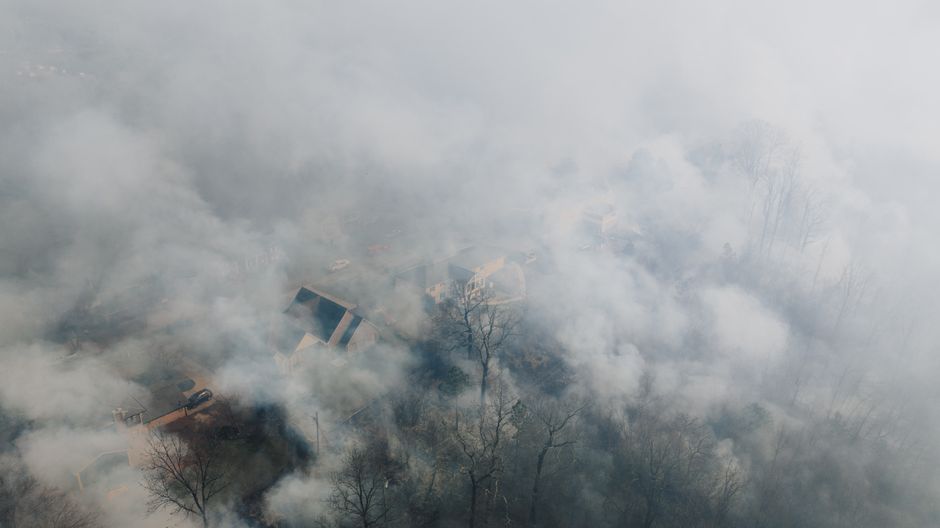
Wildfire smoke has become a regular summer problem far beyond the West Coast — smoke from Canadian wildfires has repeatedly pushed air quality to unhealthy levels across the US Midwest and Northeast in recent years. If you’re running an air purifier more than usual, or you’ve had to leave home because of smoke or fire damage, there are real financial tools worth knowing about: a federal tax deduction for medically necessary air purifiers, and how disaster assistance and insurance work together when a wildfire is involved.
Can You Deduct an Air Purifier on Your Taxes?
Yes — but only under specific conditions. The IRS treats a home air purifier as a potentially deductible medical expense, not a general home improvement, which means it only qualifies if it’s genuinely for treating or managing a diagnosed medical condition (such as asthma, COPD, or severe allergies), not just general comfort during smoke season.
1. You Have to Itemize on Schedule A
Medical expense deductions, including a qualifying air purifier, only count if you itemize deductions on Schedule A (Form 1040) instead of taking the standard deduction. If you take the standard deduction, this write-off isn’t available to you, regardless of whether the purifier itself qualifies.
2. Only the Amount Above 7.5% of Your AGI Counts
Per IRS Topic 502, you can only deduct the portion of your total medical and dental expenses for the year that exceeds 7.5% of your Adjusted Gross Income (AGI). In practice, this means a single air purifier purchase usually won’t get you a deduction on its own — it needs to be combined with your other medical expenses for the year (doctor visits, prescriptions, insurance premiums, etc.) before the math works in your favor.
3. You Need Medical Documentation, Not Just a Receipt
Because an air purifier could just as easily be a general comfort purchase, the IRS generally expects a Letter of Medical Necessity (LMN) from a doctor connecting the purifier to a specific diagnosed condition. Keep this letter with your tax records — a store receipt alone is unlikely to hold up if your return is questioned.

4. What Definitely Doesn’t Qualify
The IRS is explicit that general health-improvement purchases don’t count. That includes air purifiers bought purely for comfort, cosmetic reasons, or general wellness without a diagnosed condition behind them. The same logic applies to related purchases like air conditioning or HVAC upgrades — they can sometimes qualify, but only with the same kind of medical documentation, and often only the incremental cost above a standard non-medical version.
When Wildfire Smoke Damages Your Home: FEMA and Insurance
If a wildfire near you is declared a federal disaster, a separate set of protections can kick in — and it’s worth understanding how they interact with your existing insurance, since the two are not meant to duplicate each other.
5. FEMA Assistance Fills Gaps, It Doesn’t Replace Insurance
FEMA’s Individuals and Households Program (IHP) is designed to help with basic, serious needs after a federally-declared disaster — but by law, FEMA cannot pay for something your insurance already covers or is expected to cover. If you have homeowners or renters insurance, you’re generally required to file that claim first. FEMA assistance is meant to help with underinsured or uninsured gaps, not to duplicate a payout you’re already getting elsewhere.
6. Check Your Policy for Smoke Damage and Evacuation Coverage
Standard homeowners and renters insurance policies often include coverage for smoke damage to your home’s interior (from ash and residue, even without direct fire contact) and, in some cases, additional living expenses if you’re forced to evacuate. Coverage details vary significantly by insurer and policy, so this is genuinely worth a call to your agent before a wildfire season gets bad in your area — not after.

FAQ
Do I need to wait for a federal disaster declaration to get FEMA help?
Yes. FEMA’s Individuals and Households Program only becomes available in areas covered by a federal disaster declaration for that specific wildfire event. Check DisasterAssistance.gov to see if your area currently qualifies.
Can I deduct an air purifier if I don’t have a diagnosed medical condition?
Generally no. Without a doctor’s documentation linking the purchase to a specific medical condition, the IRS is likely to treat it as a non-deductible general health/comfort expense.
Does a HEPA filter for my HVAC system count the same way as a standalone air purifier?
The same basic rules apply — it needs medical necessity documentation, and typically only the cost above what a standard (non-medical) filter or system would have cost is deductible.
This article is for general informational purposes and is not tax, legal, or insurance advice. Tax rules and FEMA disaster declarations change; confirm current details on IRS.gov and DisasterAssistance.gov, and check your specific insurance policy before making decisions.