
If you are a senior on a fixed income, you have probably already heard of LIHEAP or the Weatherization Assistance Program. But there is another source of savings that a lot of people miss completely: your own utility company. Many electric, gas, and water providers run their own senior or low-income discount rates that are completely separate from any federal program — and in most cases, nobody sends you a letter telling you they exist.
Below is a step-by-step walkthrough of how to find these utility-company-run programs in 2026, how they differ from LIHEAP, and how to combine both types of help for the biggest possible savings on your electric, gas, and water bills.
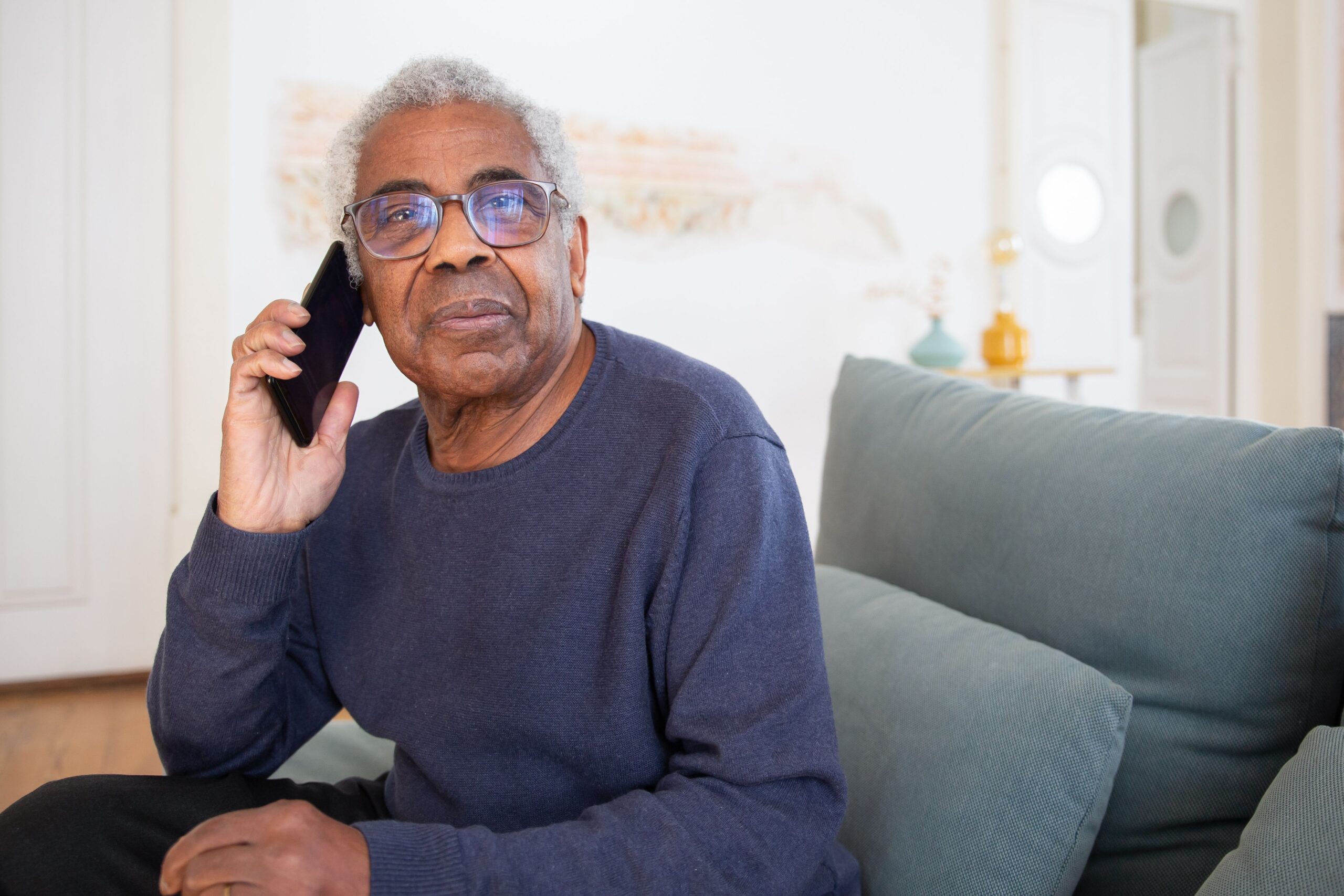
Why Utility Companies Offer Their Own Senior or Low-Income Discount Rates
It is easy to assume that all bill-paying help for seniors comes from the government. In reality, a large number of electric, gas, and water companies offer their own reduced-rate tariffs, tiered discount plans, or special “medical baseline” rates directly to qualifying customers. These are not government programs — they are approved by state utility regulators, but funded and administered by the utility company itself.
The catch is that availability, eligibility rules, and the size of the discount vary enormously depending on which company serves your address and which state you live in. A senior discount that knocks 20% off a bill in one utility territory might not exist at all with the provider one county over. That is exactly why this type of savings is so easy to miss — there is no single national database that lists every provider’s program.
Step 1 — Call Your Utility Provider and Ask Directly
This is the single most effective step, and also the one most people skip. Because these programs are rarely advertised on the homepage of a utility company’s website, the fastest way to find out what is available is simply to call the customer service number on your bill and ask.
Use these exact phrases when you call, since customer service representatives often respond faster to specific program names than to a general question like “do you have any discounts”:
- “Do you offer a senior discount rate?”
- “Is there a low-income rate program I might qualify for?”
- “Do you have a medical baseline rate for customers with a medical condition that requires extra heating, cooling, or powered equipment?”
- “Can I sign up for budget billing to even out my monthly payments?”
Many providers genuinely do not promote these programs unless a customer asks, simply because enrollment reduces their own revenue. Asking directly, by name, is often the only way in.
Step 2 — Check State- and City-Run Utility Assistance Programs
On top of what your individual utility company offers, many states and cities run their own separate energy affordability programs that layer on top of provider-level discounts.
Examples of City and State Programs
These typically fall into a few categories:
- Municipal utility discount programs — run directly by city-owned electric, gas, or water utilities for residents within city limits
- State energy affordability programs — statewide rate discount programs administered through a state public utilities commission
- State-run energy funds — one-time or recurring grants for qualifying low-income and senior households, separate from LIHEAP
Why You Should Search With Specific Terms
Because these programs are scattered across thousands of individual utility companies and state agencies, a generic search rarely surfaces the right result. Instead, search specifically for:
- “[your utility company name] + senior discount”
- “[your state] + utility assistance program”
Swapping in your exact provider name and state usually turns up the correct program page within the first few search results, where a general search for “senior utility discounts” often does not.

Step 3 — Layer It With Federal Programs for Bigger Total Savings
A common misconception is that you have to choose between a utility company’s own senior rate and a federal program like LIHEAP. In most cases, that is not true — the two are not mutually exclusive, and combining them typically produces the largest total savings.
As a quick refresher on how the federal side works:
- LIHEAP (Low Income Home Energy Assistance Program) helps eligible households pay their heating and cooling bills directly, sometimes as a one-time credit applied straight to your account.
- The Weatherization Assistance Program pays for free home energy upgrades — insulation, air sealing, furnace repairs — that lower your usage (and therefore your bill) permanently going forward.
Because a utility company’s senior or low-income rate reduces your per-unit price, while LIHEAP reduces what you owe on a specific bill, and Weatherization reduces how much energy you use in the first place, all three attack the problem from a different angle. Stacking them is usually allowed and often produces meaningfully more savings than relying on any single program alone.
Federal Programs vs. Utility Company Programs at a Glance
| Program Type | Who Runs It | What It Does | How Often You Apply |
|---|---|---|---|
| LIHEAP | Federal government, administered by your state | Pays part of a heating/cooling bill directly, sometimes as a one-time credit | Usually once per heating/cooling season |
| Weatherization Assistance Program | Federal government, administered by local agencies | Free home energy upgrades that lower usage long-term | One-time application; upgrades can take months to schedule |
| Utility Company Senior/Low-Income Rate | Your individual electric, gas, or water provider | Reduces your per-unit rate or monthly base charge on every bill | Enroll once; discount usually continues automatically each billing cycle |
| State/Municipal Energy Fund | State agency or city-owned utility | Additional grants or rate reductions layered on top of the above | Varies — some annual, some ongoing |
Step 4 — Use a Free Benefits Screening Tool Instead of Guessing
If calling around to multiple agencies sounds overwhelming, you do not have to figure out eligibility on your own. Two free resources can do most of the legwork for you:
- NCOA’s BenefitsCheckUp — a free online screening tool that matches your household to benefit programs you may qualify for, including utility bill assistance, based on a short questionnaire.
- Local Benefits Enrollment Centers — community-based organizations, often funded through NCOA, that provide free, one-on-one help applying for benefits, including utility discounts.
- The National Energy Assistance Referral (NEAR) hotline — a free hotline that can point you toward LIHEAP-adjacent help in your specific state.
These tools exist specifically because eligibility rules differ so much by location. Rather than guessing whether you qualify, a five-minute screening can tell you exactly which programs to pursue first.
Budget Billing and Payment Plans: Smoothing Out High-Bill Months
Even after you have applied every discount available to you, some months — especially the coldest winter months or the hottest summer months — will still produce a higher bill than others. Two tools can help smooth that out.
Budget billing (sometimes called “average billing” or “equal payment plans”) averages your estimated annual usage into a flat, predictable monthly payment, rather than charging you the full swing between a low-usage month and a high-usage month. It does not reduce your total annual cost, but it makes budgeting far more manageable, which matters a great deal on a fixed income.
Payment plans are different: they let you spread out an existing balance over several months. The important thing is to set one up before you fall behind, not after. Utility companies are generally far more willing to work with a customer who calls proactively than one who is already facing a shutoff notice.

Utility Discount Scams to Watch For
Unfortunately, scammers frequently target seniors by impersonating utility companies and offering fake “senior discount enrollment.” A few rules will protect you:
- Real programs never require an upfront “enrollment fee.” Legitimate senior or low-income utility discounts are free to apply for. Anyone asking for payment, gift cards, or a wire transfer to “activate” a discount is running a scam.
- Always verify through the number printed on your actual bill — not a number a caller gives you, and not a number from a text message link. If someone calls claiming to be from your utility company, hang up and call the number on your most recent paper or online statement instead.
- Never give out your Social Security number, bank account, or full account number over a call you did not initiate.
Quick Decision Checklist: What Should You Do First?
Not sure where to start? Match your situation to the steps below.
- If you have never called your utility company about a discount — start there. It is free, takes about ten minutes, and is the single highest-value first step.
- If you already have a utility discount but your bill still feels unmanageable — ask about budget billing next, so at least your monthly payment becomes predictable.
- If you have a medical condition that requires extra heating, cooling, or powered medical equipment — specifically ask about a “medical baseline rate,” which is often more generous than a standard senior discount.
- If you are already behind on a bill — call today and ask for a payment plan before a shutoff notice arrives; providers are far more flexible with customers who reach out first.
- If you are not sure what you qualify for at all — run NCOA’s BenefitsCheckUp or contact a local Benefits Enrollment Center before applying to anything, so you are not missing programs you did not know existed.
- If someone calls you offering to “enroll” you for a fee — hang up, and call the number on your actual bill to check whether the offer is real.
Quick Checklist Before You Call Your Utility Company
Having these on hand before you dial will make the call go much faster:
- Proof of age or a government-issued ID
- Income documentation (recent pay stubs, benefit statements, or tax return)
- Your most recent utility bill, with your account number visible
- A Social Security or pension award letter, if you are asked to verify fixed income
Final Thoughts
Utility company senior discount programs are one of the most underused ways to lower a monthly bill, largely because they are not centrally advertised the way federal programs are. The fastest path to savings in 2026 is simple: call your provider directly, ask by name for a senior, low-income, or medical baseline rate, check what your state or city offers on top of that, and layer in LIHEAP or Weatherization Assistance if you qualify. None of these steps cost anything to try.
Frequently Asked Questions
Do utility company senior discounts require a minimum age?
Requirements vary by provider. Some set a minimum age (commonly 60 or 65), while others base eligibility on income rather than age alone. Always confirm the exact requirement with your specific provider.
Can I get a utility discount and LIHEAP at the same time?
In most cases, yes. A utility company’s own senior or low-income rate and a federal program like LIHEAP are typically not mutually exclusive, since they work in different ways — one lowers your rate, the other helps pay a specific bill.
What if my utility company says they don’t have a senior discount?
Ask specifically about a “low-income rate” or “medical baseline rate” instead, since some providers use different names for similar programs. You can also check your state’s public utilities commission website or run a free screening through NCOA’s BenefitsCheckUp.