
Saving for a first home in Canada is harder than it used to be, but the First Home Savings Account (FHSA) is one of the most powerful tools available in 2026 for shrinking the gap. It combines the tax deduction of an RRSP with the tax-free withdrawals of a TFSA, and it can be stacked with the RRSP Home Buyers’ Plan for an even bigger down payment. Here are the 7 things every prospective first-time buyer should know about the FHSA before opening one.

1. What Is the FHSA
The First Home Savings Account is a registered, tax-free account designed specifically to help Canadians save for their first home. It was launched in 2023 and is administered by the Canada Revenue Agency (CRA).
The FHSA works like a hybrid of two accounts you may already know:
- Like an RRSP — contributions are tax-deductible, lowering your taxable income for the year
- Like a TFSA — investment growth inside the account, and qualifying withdrawals, are completely tax-free
2. Who Qualifies
Not everyone can open an FHSA. To be eligible, you must be:
- A resident of Canada
- At least 18 years old (or the age of majority in your province) and no older than 71
- A first-time home buyer — meaning you (or your spouse or common-law partner) have not owned and lived in a home as your principal residence during the current calendar year or the previous four calendar years
That last point matters: you can still qualify even if you owned a home in the more distant past, as long as it’s been at least four full calendar years.
3. Contribution Limits
The FHSA has both an annual and a lifetime cap:
- $8,000 per year
- $40,000 lifetime maximum
If you don’t contribute the full $8,000 in a given year, the unused room carries forward — up to an extra $8,000 in a later year. So if you contribute nothing in year one, you could contribute up to $16,000 in year two.
Keep an eye on the clock too. Your participation period ends on December 31 of the year of whichever comes first: the 15th anniversary of opening your first FHSA, the year you turn 71, or the year after your first qualifying withdrawal.
A Contribution Example
Say you open an FHSA in 2026 and put in $3,000. Your first-year room was $8,000, so $5,000 is unused. That amount carries forward, and your 2027 room becomes $8,000 + $5,000 = $13,000. Carry-forward is capped at $8,000, so if you skipped 2026 entirely you would have $16,000 of room in 2027, not more.
The $40,000 lifetime cap also sets a floor on how fast you can fill the account. With $8,000 a year, you reach the cap in five years.
Going over your room is costly. The CRA charges a tax of 1% per month on the highest excess amount in the month, so check your room before you make a large transfer in.
4. Tax Benefits
The FHSA’s biggest draw is that it stacks tax advantages from both sides:
- Contributions are tax-deductible, just like an RRSP — claim them and reduce your taxable income
- Investment growth inside the account is completely tax-free
- Qualifying withdrawals used to buy a home are tax-free and never need to be repaid — unlike the RRSP Home Buyers’ Plan, which must be paid back over time
That last point is the key difference from the RRSP Home Buyers’ Plan (HBP): FHSA withdrawals are yours, permanently, with no repayment schedule attached.
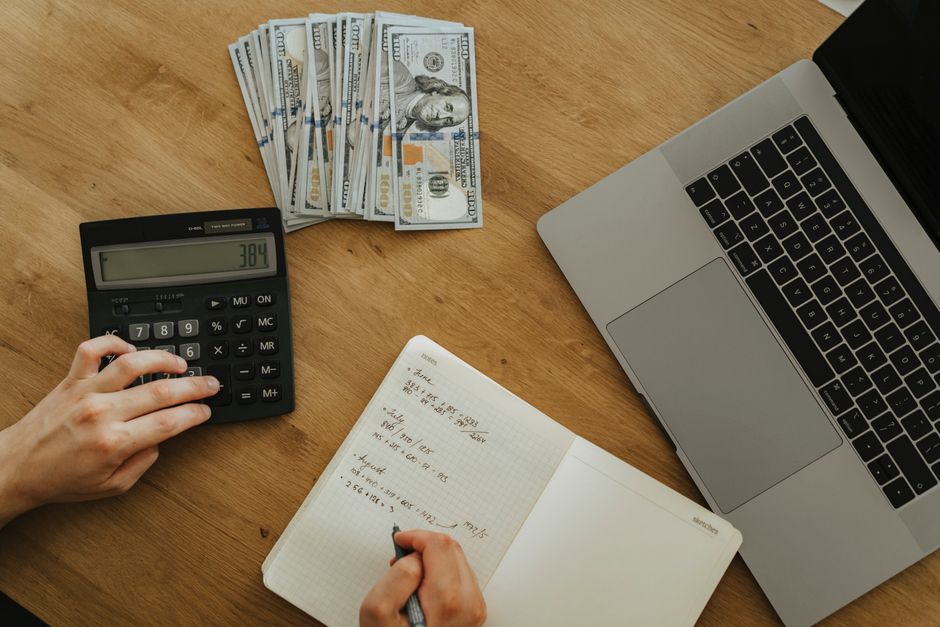
To see what the deduction is worth, say you contribute $8,000 in a year when your combined federal and provincial marginal tax rate is 30%. The deduction cuts your tax bill by about $2,400. Your actual rate depends on your income and province, so treat that as an illustration rather than a forecast.
5. Combining the FHSA With the RRSP Home Buyers’ Plan (HBP)
Here’s where the strategy gets powerful. The FHSA and the HBP are separate programs, and you can use both:
- Up to $40,000 tax-free from the FHSA — no repayment required
- Up to $60,000 from an RRSP under the HBP — must be repaid over 15 years
That’s a potential $100,000 from a single buyer. For a couple who are both first-time buyers, each partner can use their own FHSA and HBP, for up to $200,000 combined. The CRA confirms you can make a qualifying FHSA withdrawal and an HBP withdrawal for the same qualifying home, as long as you meet the conditions at the time of each withdrawal.
Two caveats keep that number honest. The FHSA figure assumes you have contributed the full $40,000, which takes at least five years. The HBP figure assumes you already hold that much in an RRSP. Also, the HBP repayment clock is more forgiving than it used to be: if your first HBP withdrawal is between January 1, 2026 and December 31, 2028, the 15-year repayment period starts in the fifth year after the withdrawal year. A first withdrawal in 2026 means your first repayment year is 2031.
FHSA vs. RRSP Home Buyers’ Plan vs. TFSA
| FHSA | RRSP (Home Buyers’ Plan) | TFSA | |
|---|---|---|---|
| Contributions deductible? | Yes | Yes | No |
| Tax on a home-purchase withdrawal | None | None, but you must repay it | None |
| Repayment required? | No | Yes, over 15 years | No |
| Limit on home-purchase use | $40,000 lifetime | $60,000 withdrawal limit | Your available room |
| Annual room in 2026 | $8,000 | Lesser of 18% of prior-year earned income or $33,810, less pension adjustments, plus unused room | $7,000, plus unused room |
For most first-time buyers who can afford it, the FHSA is the first account to fill because it combines the deduction and the tax-free withdrawal with no repayment. The HBP is a supplement for savers who already have RRSP money, and the TFSA is the flexible option if you might not buy a home at all.
6. How to Open and Withdraw
Opening an FHSA is straightforward:
- Open an account at a bank, credit union, or online brokerage that offers the FHSA
- To make a qualifying withdrawal, you need a written agreement to buy or build a qualifying home in Canada, with the purchase or completion date before October 1 of the year after the withdrawal. You also fill out Form RC725 and give it to your FHSA issuer
- You must intend to live in the home as your principal residence within one year of buying or building it
- A withdrawal that does not meet the conditions is taxable as income in the year you take it out
- If you don’t end up buying a home, the funds aren’t lost. A direct transfer to your own RRSP or RRIF is tax-free, as long as you have no excess FHSA amount
That last safety net is worth remembering: plans change, and the FHSA doesn’t punish you for it.

7. FAQ
Can I have both an FHSA and use the RRSP Home Buyers’ Plan at the same time?
Yes. The FHSA and the HBP are separate programs with separate limits, and eligible first-time buyers can use both toward the same home purchase.
What happens to my FHSA if I don’t buy a home?
You can transfer the funds tax-free into an RRSP or RRIF, so the money isn’t lost — it just keeps growing under different rules.
Is the $8,000 annual limit indexed to inflation?
Contribution limits are set by the federal government and can be adjusted through future legislation. Always check Canada.ca for the current year’s confirmed limits before assuming they carry forward unchanged.
Related: CRA Confirms the New 2026 RRSP Contribution Limit: $33,810
This article is for general informational purposes and is not tax, legal, or financial advice. FHSA rules and limits can change with future CRA and federal government guidance. For guidance specific to your situation, consult Canada.ca or a licensed tax or financial professional.